
Headache & Migraine Physiotherapy
Headaches and migraine disorders - treated by experienced physiotherapists.
You do not have to live with constant pain. We treat the root cause, not just the symptoms.
You have been managing your headache for years. There may be a better answer.
Most people with chronic headaches have been through the same path. You have tried pain relief, maybe preventive medication, possibly a neurologist referral. You have been told your scans are clear, your bloods are normal, and to keep a headache diary. The headaches keep coming.
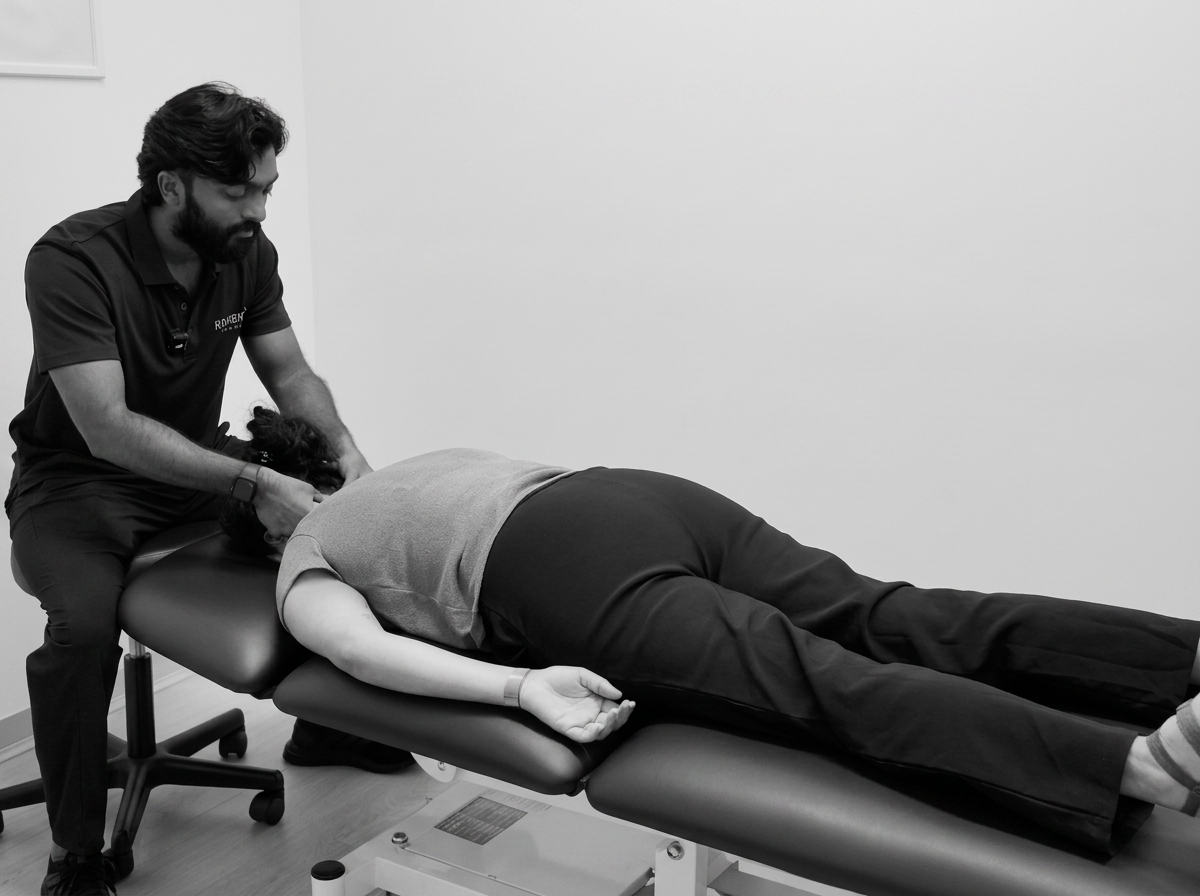
What is often missed is the role of the upper cervical spine — the top three joints in your neck. Research shows that dysfunction in this area is a direct driver of many headache types, including what are often labelled as migraines. It is highly treatable with the right hands-on physiotherapy.
Hormones, stress, and triggers all play a role in migraine. But so does the physical state of your neck and nervous system. We look at all of it, and we treat what we find.
Headache Conditions We Treat
-
The most common headache type: a band of pressure or tightness around the head, often linked to neck and shoulder tension, posture, and stress.
Responds well to manual therapy, targeted neck exercises, and load management. Most people do not need to put up with these long-term.
-
Head pain that comes from the neck — specifically the upper cervical joints, muscles and nerves.
Often feels like a one-sided headache that starts at the base of the skull and moves forward. Can mimic a migraine but responds directly to hands-on physiotherapy.
Often missed because scans look normal.
-
Migraines that happen 15 or more days per month.
Medication can reduce frequency but does not address physical triggers: including neck stiffness, nervous system sensitisation, and postural load.
We work alongside your GP or neurologist to reduce the frequency and severity of attacks.
-
A type of migraine where dizziness is the main symptom — sometimes with no headache at all.
One of the most under-diagnosed causes of dizziness in adults.
We treat both the vestibular and headache components, combining two specialist areas in one assessment.
-
Headaches are the most persistent symptom after a concussion and can last months without proper treatment.
We assess cervical, vestibular and neurological contributors and build a structured return-to-activity programme to address the cause, not just the pain.
-
Ongoing TMJ issues, neck pain and headaches often share the same root cause - stiffness and dysfunction in the upper cervical spine.
If your jaw/neck pain and headaches always come together, this pattern is a strong signal that the neck is driving both. It is very treatable.
The Difference
What most people go through
You take pain relief or triptans each time a headache hits, and wait for it to pass.
You are started on preventive medication that may or may not work, with side effects to manage on top of everything else.
You are told to keep a headache diary, avoid your triggers, and reduce stress.
Your scans come back clear, so nothing physical is ever examined or treated.
You start to plan your life around your headaches; cancelling plans, missing work, not making commitments.
You accept it as something you just have to manage forever.
The Rehab Pro Approach
A thorough physical assessment of your neck, posture, jaw and nervous system.
A clear diagnosis of whether your headaches have a cervical, vestibular, or neurological driver.
Hands-on treatment targeting the physical cause, combined with exercises to prevent recurrence.
A realistic plan with timelines so you know what to expect and are not just hoping for the best.
Fewer headaches. Less reliance on medication. More control over your own life again.
Your Path To Recovery
-
Your first appointment runs for 60 minutes.
We take a detailed history of your headache pattern, assess the movement and stiffness of your upper cervical spine, evaluate your posture and any vestibular or jaw involvement, and identify what is physically driving your headaches.
-
Treatment is built around your specific headache type and physical findings.
For cervicogenic headache this usually means hands-on joint mobilisation, soft tissue work, and targeted neck exercises.
For chronic migraine we layer in nervous system management, load pacing and posture work.
We tell you how many sessions to expect upfront.
-
We track headache frequency, severity and medication use across every session.
When you are ready for discharge, we give you a self-management program (exercises, load management strategies, and a plan for handling flare-ups) so the improvements hold long-term.
FAQs
Can physiotherapy help my migraines?
1
Yes. Migraines with a cervical or vestibular component respond very well to physiotherapy.
Even for classic migraine without a clear physical driver, treating neck stiffness and nervous system sensitisation can significantly reduce frequency and severity.
Physiotherapy is not a replacement for medication, but it is a powerful addition that addresses physical causes medication alone cannot fix.
What is cervicogenic headache and how do I know if I have it?
2
Cervicogenic headache is head pain caused by problems your cervical spine, specifically the top 3 joints in your neck.
It often presents as a one-sided headache starting at the base of the skull, sometimes spreading to the forehead or eye. It is commonly worsened by neck movement or staying in one position for a long time.
It can look exactly like a migraine, which is why it often goes undiagnosed. A skilled physiotherapy assessment can identify it quickly.
My scans are clear. Can physiotherapy still help?
3
Yes. Most cervicogenic headaches and migraines do not show up on scans.
A clear MRI means there is no serious structural problem, it does not mean there is nothing physical to treat.
Joint stiffness, muscle tension, nerve sensitivity and postural load are all physical causes that physiotherapy can address, and none of them appear on imaging.
Do I need a referral from my GP?
4
No. You can book directly without a referral.
If you have a Chronic Disease Management Plan from your GP, you may be eligible for Medicare rebates.