
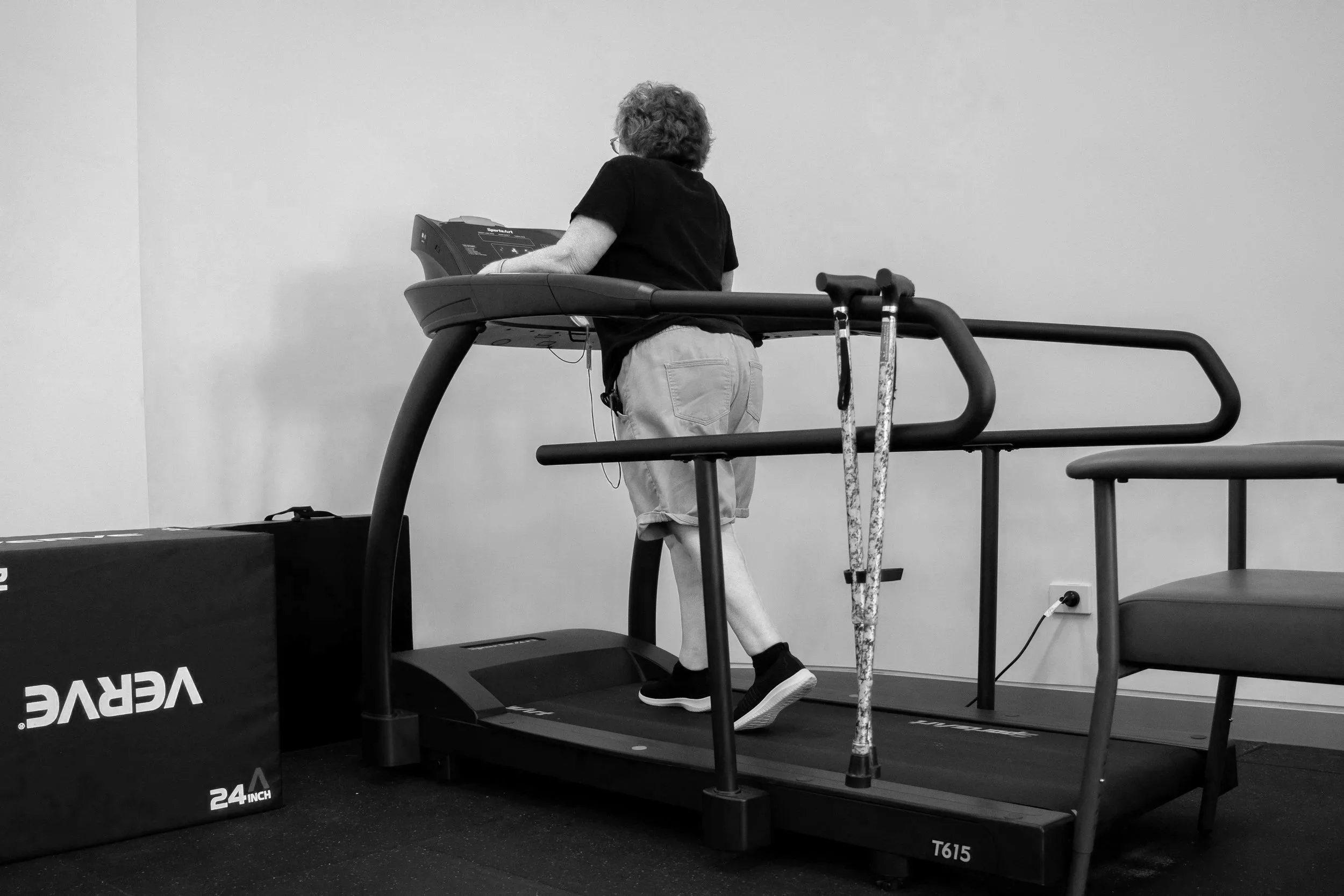
Neurological Rehabilitation
Specialist physiotherapy for acute or permanent neurological conditions.
Your brain can keep changing.
So can your life.
After a neurological event or diagnosis, people are often told what they cannot do. You might have been given a hospital discharge pack with some exercises, a follow-up appointment in three months, and not much in between. Or you are living with a progressive condition and no one has talked to you about what exercise and rehab can actually do to slow things down.
The science on neuroplasticity is clear: the brain continues to rewire and adapt throughout life. High-intensity, task-specific exercise drives that rewiring. It is not about doing gentle movements, it is about giving the brain the right input, at the right intensity, with enough repetition to create real change.
Most people with neurological conditions are not getting anywhere near enough of the right kind of rehabilitation. We are here to fix that.
Neurological Conditions We Treat
-
Stroke can affect walking, balance, arm function, speech and cognition.
Early and intensive physiotherapy is the most important thing you can do after a stroke.
We use evidence-based protocols including the 1000 Reps a Day approach to drive motor relearning and functional recovery.
We offer clinic appointments and home visits for people who cannot travel.
-
Parkinson's causes movements to become smaller, slower and stiffer over time — but high-intensity, neuroplasticity-based exercise can push back against that progression.
We are a licensed PD Warrior facility. The program runs twice weekly for 10 weeks and focuses on big, fast, powerful movements that challenge the brain and body.
NDIS funded participants welcome. -
MS affects each person differently - fatigue, balance, walking, hand function and cognition can all be involved.
Physiotherapy improves function, reduces falls risk, and maintains independence for longer.
We build programs around your energy levels, your relapse pattern, and your goals. -
FND causes real neurological symptoms - weakness, tremor, gait problems, non-epileptic seizures - without a structural lesion on imaging.
It is treatable, but often poorly understood and underserved.
We use a graded, collaborative approach that works with the nervous system rather than against it, alongside your neurologist and other treating team members.
-
We assess the cause of balance problems (vestibular, sensory, neurological, or musculoskeletal) and build a targeted program.
For people who have already had a fall, or who are afraid of falling, structured balance rehab significantly reduces risk and rebuilds confidence.We offer home assessments to identify environmental hazards alongside the physical program.
-
Neurological physiotherapy is not limited to the conditions listed above.
We see people with a wide range of diagnoses - including ataxia, essential tremor, dystonia, Huntington's disease, hereditary spastic paraplegia, acquired brain injury, and cerebral palsy.
We also support people who are recovering from neurosurgery or brain tumour treatment, and those with incomplete spinal cord injuries.
If you have a neurological diagnosis and are unsure whether physiotherapy can help, contact us before booking - we will tell you honestly whether we are the right fit, and refer on if we are not.
Many people come to us without a clear diagnosis — or with a diagnosis but no rehabilitation plan. If you have been told you have a neurological condition, if your movement or balance is getting worse, or if you have had a neurological event and feel like you have reached a plateau, get in touch. We will do a thorough assessment, work out what is going on, and tell you clearly what we can do about it. You do not need to arrive with all the answers.Not sure which category fits you?
The Difference
What most people go through
A hospital discharge pack with some exercises and a follow-up in three months.
Community physiotherapy focused on safety and function, but not intensity or recovery.
Told that plateau is normal and to focus on managing symptoms rather than improving.
No one talks to you about neuroplasticity, or what the evidence actually says about exercise and recovery.
The gap between where you are and where you want to be keeps feeling permanent.
The Rehab Pro Approach
A specialist neurological assessment that looks at movement, balance, strength, and what you actually want to get back to.
High-intensity, task-specific training designed to drive neuroplasticity.
Evidence-based programmes including PD Warrior and 1000 Reps a Day — built around your diagnosis and goals.
Clear milestones and honest timelines, so you know what to expect at every stage.
A long-term partnership. Neurological rehab is not a single course — we stay involved as your needs change.
Your Path To Recovery
-
Your first appointment runs for 60 minutes.
We assess movement quality, balance, gait, strength, coordination and functional tasks, and we listen to what matters most to you.
We use validated outcome measures so we can track meaningful progress over time. For home-visit patients, we also assess the home environment. -
We build the program around your specific diagnosis and your personal goals - not a generic exercise sheet.
For Parkinson's, this is the PD Warrior protocol. For stroke, we use task-specific repetition and 1000 Reps a Day principles.
For MS and FND, we pace carefully and build a sustainable training load.
We tell you how many sessions to expect and what each phase is working toward. -
We review progress formally at regular intervals using the same outcome measures from your assessment.
For NDIS participants, we provide goal-based progress reports and functional capacity assessments to support plan reviews.
When you transition to independent maintenance, we give you a detailed home program and a clear plan for when to come back.
FAQs
Is it too late to start rehabilitation months after my stroke?
1
No. The brain keeps its ability to rewire and adapt - this is neuroplasticity, and it does not have a cut-off date.
The highest rate of recovery is in the first few weeks, but meaningful gains are possible at 6 months, 2 years, or longer after a stroke. We have worked with patients who started rehabilitation years after their event and made significant improvements.
What is PD Warrior and how will it help my Parkinson’s?
2
PD Warrior is an evidence-based neuroplasticity program designed specifically for Parkinson's disease.
It uses high-intensity, challenging, whole-body movements to drive brain change - the same mechanism that medication targets, but through exercise.
Standard physiotherapy for Parkinson's focuses on maintaining function.
For more information visit: www.pdwarrior.com
Can physiotherapy help with Multiple Sclerosis?
3
Yes — significantly. Physiotherapy cannot stop MS from progressing, but it can slow functional decline, improve balance and walking, reduce falls risk, and help manage fatigue.
Exercise also has a neuroprotective effect - it reduces inflammation and supports brain health. We adapt the program around your relapse pattern, energy envelope, and current function.
No. You can book directly without a referral.
If you have a Chronic Disease Management Plan from your GP, you may be eligible for Medicare rebates.
4
Do I need a referral from my GP?
Yes we are NDIS registered providers.
To use your NDIS plan with us please fill out our NDIS referral form.