
Vestibular Physiotherapy
Dizziness, vertigo & balance problems - treated by experienced vestibular therapists.
You do not have to live with dizziness. We treat the root cause, not just the symptoms.
You have been told to wait it out.
You shouldn’t have to.
When dizziness first starts, most people see their GP, get some blood tests, and are told nothing is seriously wrong. Maybe you are given medication that dulls the symptoms but does not stop them. Maybe you are referred to a specialist with a 3-month wait.
In the meantime, you stop doing things you used to do. You avoid busy places, avoid driving at night, avoid rolling over too fast in bed. You stop trusting your own body, and living life.
Many vestibular conditions, especially BPPV, have highly effective, fast treatments that most GPs don’t keep up to date with. The right assessment and the right treatment can change things significantly, often faster than you expect.
Vestibular Conditions We Treat
-
The most common cause of vertigo. Happens when crystals in your inner ear move to the wrong place, causing spinning when you roll over, look up, or bend forward.
Most people improve in 1 to 3 sessions using repositioning manoeuvres.
-
A type of migraine where dizziness is the main symptom, sometimes without any headache.
One of the most commonly missed diagnoses in dizziness.
-
Chronic dizziness where the brain stays in a heightened state of alert after an initial vestibular event.
Causes ongoing dizziness, unsteadiness, and sensitivity to movement, screens and busy environments.
Treated with graded vestibular exercises and nervous system regulation.
-
Dizziness is one of the most common symptoms after a concussion and can last weeks or months without treatment.
We assess vestibular, visual and cervical causes and build a structured return-to-activity program.
-
When one side of the inner ear is not working properly, often after a viral illness or vestibular neuritis.
Causes ongoing dizziness, difficulty in the dark and trouble focusing during head movement.
Vestibular rehab retrains the brain to compensate.
-
Not all dizziness has a clear label.
If you have been dizzy, off-balance or unsteady and no one has told you why, a thorough vestibular assessment can identify what is happening and what to do about it.
The Difference
What most people go through
Your GP gives you Epley or Brandt-Daroff exercises and hopes it settles down.
You are put on medication to dull the dizziness and nausea, without fixing what is causing it.
You are told to rest, take it easy, and wait.
When it does not improve, you get sent to an ENT, a neurologist, or a balance clinic.
The scans come back normal, and you’re told it’s anxiety or stress.
You are still dizzy. And now you are starting to wonder if you’re just making it up in your head.
The Rehab Pro Approach
A proper vestibular assessment — we test your eyes, inner ear, and balance to find the actual cause.
A clear explanation of what is happening in plain language — often the first time anyone has told you.
Treatment that targets the root cause, not just something to get you through the day.
A realistic recovery plan with clear milestones so you know what to expect and when.
No more guessing. No more waiting. A path forward that actually makes sense.
Your Path To Recovery
-
Your first appointment runs for 60 minutes.
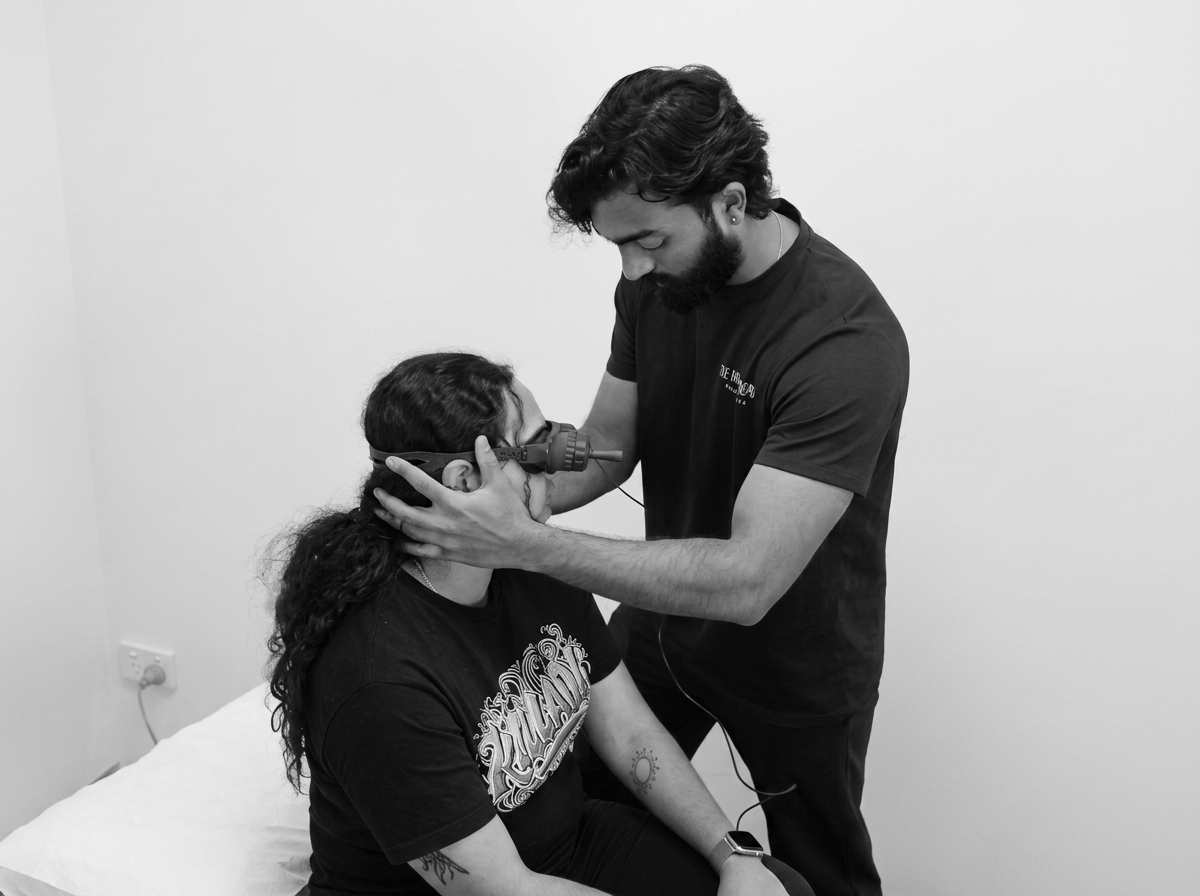
We take a detailed history, assess your eye movements, head movements and balance, and run specific tests using infrared goggles.
Most patients leave with a clear understanding of what is causing their dizziness for the first time.
-
We build a plan around your specific diagnosis.
This could be one repositioning manoeuvres for BPPV, a 4-week program for vestibular migraine, or a 12-week graded exposure plan for PPPD.
We tell you how many sessions to expect and what you can do at home. -
We track your progress at every session and adjust the plan if needed.
When you are ready for discharge, we give you a self-management plan so you can maintain your results and manage any future flare-ups with confidence.
FAQs
Will physiotherapy help my dizziness and vertigo?
1
Yes. Many causes of dizziness, especially BPPV, respond very well to physiotherapy.
BPPV typically resolves in 1 to 3 sessions.
Other conditions like vestibular migraine and PPPD take longer but still improve significantly with the right program.
Will exercises make my dizziness worse?
2
Some vestibular exercises can provoke mild dizziness - this is how the brain relearns movement.
We monitor this carefully and progress at a pace that is challenging but manageable. We never push through severe symptoms.
I have dizziness for years. Is it too late to have vestibular physiotherapy?
3
No. The brain keeps its ability to adapt and compensate - this is called neuroplasticity.
We have helped patients who have had dizziness for many years. Longer-standing conditions may take more time, but they still respond to the right treatment.
Do I need a referral from my GP?
4
No. You can book directly without a referral.
If you have a Chronic Disease Management Plan from your GP, you may be eligible for Medicare rebates.